Climate Change as a Social Issue

Currently multiple out-of-control bushfires are threatening dozens of towns in central and north-eastern Victoria, while other parts of the country swelter through another day of a heatwave.

Is it about time we shift the way we frame climate change? Could we treat it primarily as a social and political issue rather than an environmental and scientific one.

The Climate Change debate has long been about ‘listening to the science’. While this is needed, it’s not enough. It assumes a straightforward link between facts and policy. It overlooks the complexities of social change and the efforts of fossil fuel interests to block effective policy.

Politicians can no longer deny climate change exists, but they can shift blame to Nature and Natural Disasters, minimising their responsibility. Nature gets the blame instead of the ongoing mining and export of gas and coal.

Framing climate change as an environmental issue makes it seem like a problem that exists separately from society, politics, power, and culture. This view reinforces a Western mindset that has long divided people from nature.

Recognising the social aspects of climate change now is essential, or we risk normalising it.

It is a battle between expanders and restrainers

Occasionally you hear people say they care about the protection of the environment whilst also making of point of not being labeled a “Greenie.” Or those who point their finger blaming the “Greenies” for locking up natural areas, and impeding economic expansion and development.

Labels bring stereotypes, but they serve a function to help us make sense of something or to understand someone. Though, if someone teaches environmental education to primary school children are they an Environmentalist, a Conservationist, or a Tree Hugger?

Do we really need a label to show that we care about the environment? No. But how often do we see comments from 4WD off-road users, loggers, land clearers and climate deniers blaming the ‘all powerful Greenies’ for impeding their needs.

What we are seeing now is the “battle between two world views”. In that “humanity is no longer split between conservatives and liberals, reactionaries and progressives… today the battle lines are drawn between expanders and restrainers; those who believe that there should be no impediments and those who believe that we must live within limits”.1

You don’t have to be a greenie to know that without fresh air or clean water, humans have absolutely nothing.

  1. Whitehouse, Hilary, and Neus Evans. “‘I Am Not a Greenie, But’: Negotiating a Cultural Discourse.” Australian Journal of Environmental Education, vol. 26, 2010, pp. 19–31. JSTOR, http://www.jstor.org/stable/44656530. Accessed 1 Dec. 2025 ↩︎

Climate Change: What can I do?

When people talk about what they are doing to address climate change people typically tell you about individual acts of “I recycle, I don’t eat meat as often, I bicycle,”

It’s rare that somebody says, “I work on getting out the vote for climate-positive candidates, I support environmental law reform, I campaign my local state government member to put solar panels over the school parking lot.”

We’ve been encouraged to think of what we have to contribute as our individual virtue, which is mostly passive—it’s mostly not doing things. We imagine ourselves as individuals and as consumers who can consume less or consume differently. Instead, we should see ourselves as citizens, not in terms of holding a particular passport or nationality but in terms of being members of civil society.

Together, we have a lot of power to influence election results, push for important laws, teach and support each other, and participate in protests to make a difference in the world.

However, when you see everyone on their smartphones, it’s hard not to feel like technology is taking the place of face-to-face interaction, dominating our attention, making our interactions less meaningful and lowering our self-esteem.

Principled Rebellion

We are wired to fit in.

Don’t do something because it will work out or you hope that it will win over people. If you’re contributing to society and take action from a place of authenticity, than that is what will make your life and those lives around you rich, fun and fulfilling.  

Offshore Wind Farm Misinformation

Do people really believe that anti-offshore wind farm movements primary aim is to gather local community support in order to protect the environment and community values?

Facts often don’t matter to these groups. To get emotive attention groups spread misinformation and falsehoods, such as offshore wind turbines kill whales. It’s a similar playbook as that used by Anti-vax conspiracy groups and the ‘Vote No’ to the voice Referendum. Block, create doubt, fear and confusion (which is fanned by political interests) and then turn the community against to delay the transition.

Misinformation is effective, especially when shared online. It is challenging to argue against it, and nowadays people often disregard facts and science unless it aligns with their narrative and beliefs. This is particularly evident when discussing clean energy, as many people become quite emotionally charged.

Fossil fuel proponents and conservative politicians have shifted their stance from denying climate change to criticising the environmental credentials of green energy.


Human Environmental Rights

Access to a clean, healthy and sustainable environment (the right to a healthy environment) was recognised 50 years ago in the Stockholm Declaration.

Since then the right to a healthy environment has been been integrated into over 150 legal frameworks around the world; Australia remains one of only 37 of 193 UN Member States without the right to a healthy environment in their federal laws or constitution.

Whilst our parliaments enact legislation to protect environmental interests, shaping environmental protection through the lens of human rights is becoming more accepted, rather than just asserting rights possessed by nature in its own right.

The ACT Government has recently tabled a bill to make the ACT the first Australian jurisdiction to recognise the human right to a healthy environment in the Human Rights Act 2004 (ACT).

Given the absence of an ability to entrench constitutional environmental rights at the Commonwealth level it is a step forward. However, some experts believe that the current version of the Bill is not comprehensive enough as it lacks penalties and does not apply to private entities.

As the climate and environmental issues worsen, it is important to understand the connection between harm to the environment and human harm. Law and policy makers will need to strengthen existing laws to broader environmental rights protection as presently they are ill-suited to the times.

Climate Change Denial

It is easier to fool people than to convince them that they have been fooled. ” Mark Twain

If the science is so clear about climate change, why do many people still deny it?

Within the scientific community there is no debate on the reality of climate change. Yet there is a huge disparity between the scientific community and what the public believe scientists know.

Despite scientific facts, people still create their own beliefs, identity and stories. Combined with influential campaigns by political and corporate interests and people spending time online (often socially isolated and disconnected), it makes it much harder to have reasonable non-judgmental conversations.

To have any chance of society progressing we must diminish the biases that is evident in our far-reaching media and focus on having more respectful face-to-face conversations amongst ourselves.

Bushfires and our flammable continent

Summer is on its way.

World record temperatures in July, 53.3 degrees celsius recorded at California’s Death Valley, Antarctica is struggling to freeze and an unseasonable warm winter in Australia.

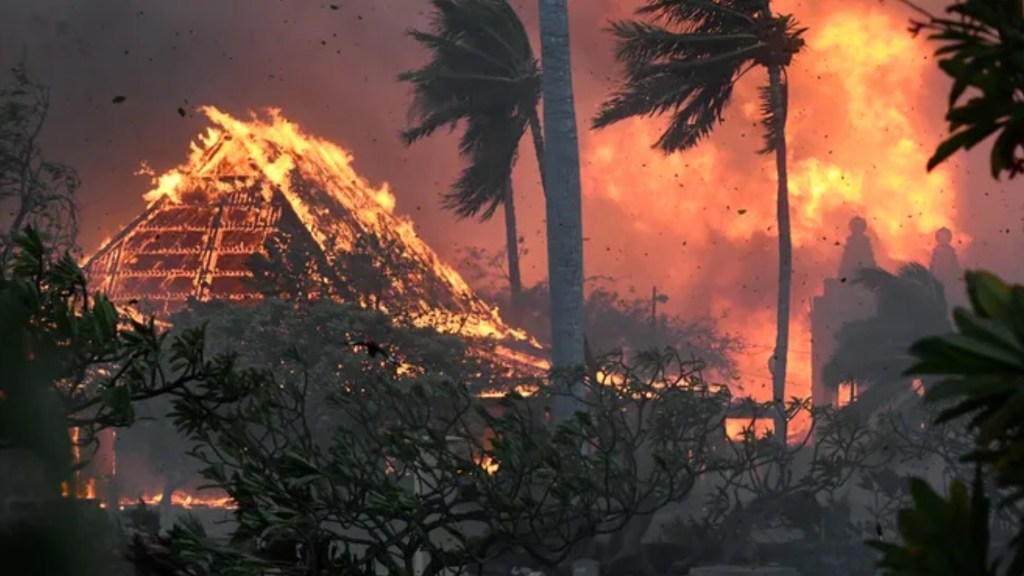
We have already witnessed devastating fires in Maui, Hawaii. Fuelled by strong winds, dry vegetation and low humidity, the fire forced people to run into the ocean, cars and houses were burnt, and innocent lives lost. Wildfires have also ripped through Greece, Spain and Portugal and Canada. At one point 1000 fires were burning in Canada.

Australia is one of the most fire prone continents on the planet.

The 2019-20 Black Summer fires saw more than 24 million hectares burnt, 33 people killed and over 3000 homes destroyed. The factors that drove the Black Summer fires are linked to climate change, resulting in longer fire seasons and extended periods of drought.

Are we prepared for the upcoming fire season? And how do we manage the escalating problem of more frequent and severe uncontrolled fires due to a warming planet?

Published
Categorized as Management

Kangaroos in residential estates

The increasing number of kangaroos impacting residential areas has sparked widespread concern and distress from affected residents across South East Queensland.

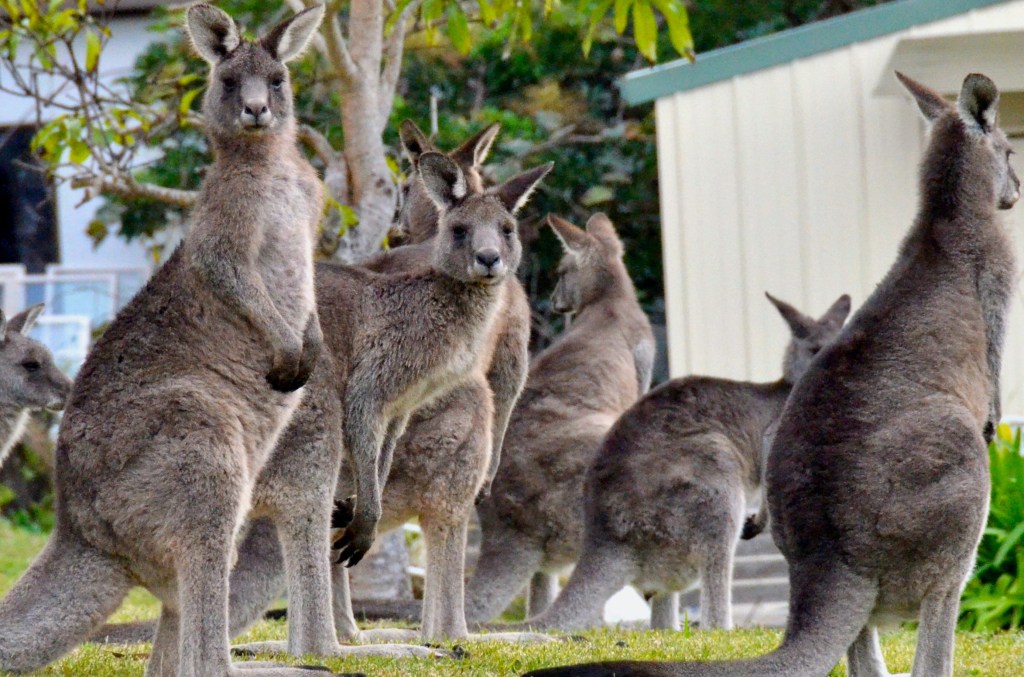
At certain times it is not unusual to see up to 10 kangaroos on residents’ front yards grazing on lawns.

Homeowners are faced with the relentless appetite for lawns and garden plants. It’s disheartening to witness the devastation caused as newly laid lawns and gardens are simply destroyed. Each day huge amounts of poo, like a hailstorm which has descended from the heavens, are collected off lawns.

The kangaroos, some as tall as 1.8m, are often located directly outside front doors, in front yards, on footpaths, roads and parklands. Often they don’t pose a threat, but with more males around and females with young, there is a far greater risk that someone will be injured.

However, there are recent examples of people being attacked in residential locations where there are high populations of kangaroos. For example, a 67-year-old woman on the Fraser Coast was recently severely attacked and injured.

Kangaroos are a disease vector for Q fever with cases of people contracting the disease on golf courses, and mowing areas with kangaroo poo. https://www.abc.net.au/news/2018-11-22/q-fever-jumps-from-paddock-to-golf-course-and-beyond/10520156

The kangaroo may be an iconic marsupial of Australia, but striking a balance between conservation and minimising conflicts with human activities needs to be addressed by government departments, especially as more residential developments encroach on natural areas.

The difficulty in finding quality information

We are exposed to so much information; but often the really important gets overlooked and buried.

It is no secret that powerful people and interests use the media to push political and economic interests onto the masses. Low quality news and irrelevant topics covered by our media is a tactic by design. It is to hinder and keep those with power unaccountable.

Media companies like News Corp and Fairfax set and control the news agenda (often taking a side) and encourage an increasingly polarised set of opinions. And worse, most media organisations now fail to call out many of the lies by corporations and politicians.

In contrast, social media does bring a wide range of views and authenticity from trusted people direct to followers. However, feeds are often polluted with inaccurate information, extreme agendas and strong opinions, which are encouraged by social media algorithms.

With the disruptive agendas and lack of checks it makes finding quality information by informed citizens, which a democracy needs, that more difficult.