
The increasing number of kangaroos impacting residential areas has sparked widespread concern and distress from affected residents across South East Queensland.
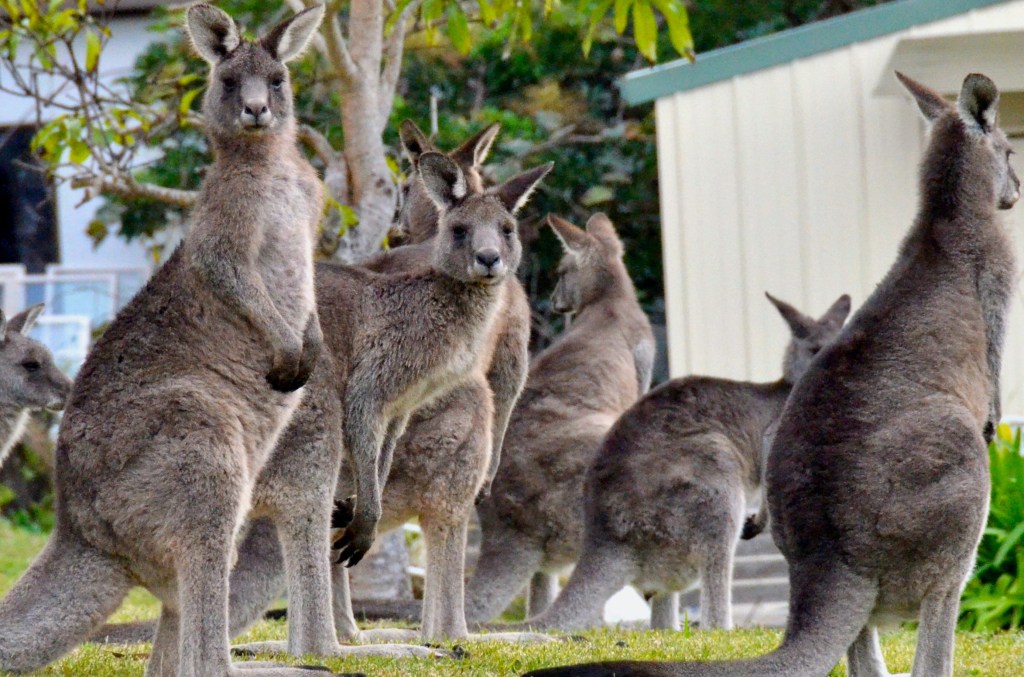
At certain times it is not unusual to see up to 10 kangaroos on residents’ front yards grazing on lawns.
Homeowners are faced with the relentless appetite for lawns and garden plants. It’s disheartening to witness the devastation caused as newly laid lawns and gardens are simply destroyed. Each day huge amounts of poo, like a hailstorm which has descended from the heavens, are collected off lawns.
The kangaroos, some as tall as 1.8m, are often located directly outside front doors, in front yards, on footpaths, roads and parklands. Often they don’t pose a threat, but with more males around and females with young, there is a far greater risk that someone will be injured.
However, there are recent examples of people being attacked in residential locations where there are high populations of kangaroos. For example, a 67-year-old woman on the Fraser Coast was recently severely attacked and injured.
Kangaroos are a disease vector for Q fever with cases of people contracting the disease on golf courses, and mowing areas with kangaroo poo. https://www.abc.net.au/news/2018-11-22/q-fever-jumps-from-paddock-to-golf-course-and-beyond/10520156
The kangaroo may be an iconic marsupial of Australia, but striking a balance between conservation and minimising conflicts with human activities needs to be addressed by government departments, especially as more residential developments encroach on natural areas.

